This Shopify Plus vs Salesforce Commerce Cloud comparison highlights two distinct models. Shopify Plus wins on launch speed, lower ownership costs, and checkout conversion. Salesforce Commerce Cloud wins on deep B2B hierarchies, complex multi-region catalogs, and direct integration with Salesforce CRM.
The wrong enterprise commerce tool will cost you months of lost time and thousands of wasted dollars. This Shopify Plus vs Salesforce Commerce Cloud comparison helps you avoid that trap.
Most online reviews share outdated vendor guesses. They never explain how these platforms hurt your daily team, tie up software developers, or drain your bank account.
I break down real platform fees, B2C checkout rates, B2B wholesale tools, SEO controls, and total ownership costs.
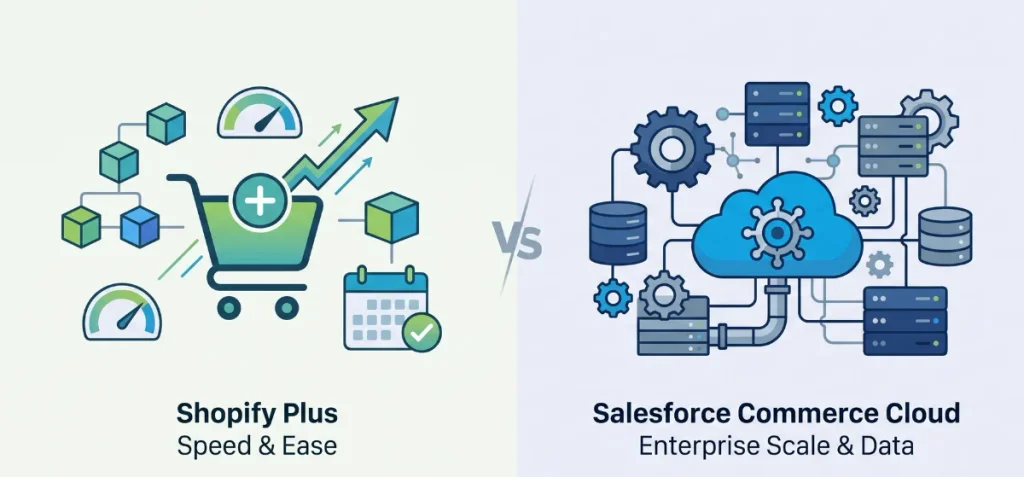
Shopify Plus vs Salesforce Commerce Cloud: Quick Comparison
| Decision Factor | Shopify Plus | Salesforce Commerce Cloud |
| Best For | Direct-to-consumer brands and retail stores | Huge global brands with big IT teams |
| Starting Price | $2,300 per month on a 3-year term | Custom quote only |
| B2C Selling | Fast pages and high checkout sales | Advanced sorting tools and product grouping |
| B2B Features | Enterprise tools like custom price lists and payment terms | Deep procurement rules and multi-level buyer roles |
| CRM Connection | Connects with apps or custom code | Built right into the Salesforce software family |
| Setup Speed | Faster to build and launch | Needs certified development agencies |
| Daily Work | Marketing teams can make edits alone | Needs software developers for routine changes |
| Global Stores | Built-in tools for local money and languages | Deep controls for local pricing across many sites |
| Main Reason to Pick | Fast setup and easy daily updates | Deep connections to existing Salesforce data |
Source Note: Pricing and feature details come from current public pages from Shopify and Salesforce.
Shopify provides basic B2B features on standard plans. Shopify Plus gives enterprise brands unlimited custom catalogs and direct company profiles.
Salesforce doesn’t post a fixed public price list. Third-party estimates of Salesforce costs are market guesses, not fixed vendor rates.
Shopify Plus vs Salesforce Commerce Cloud for B2C
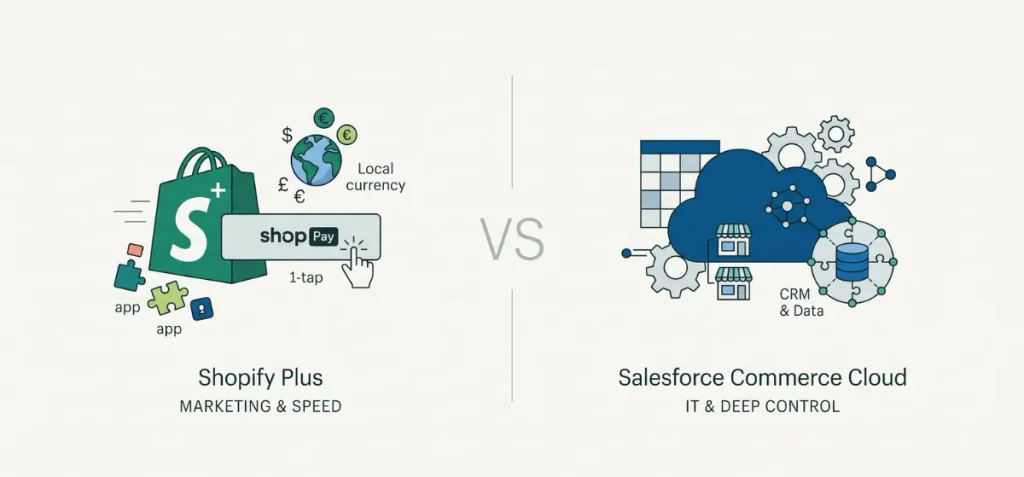
Both platforms handle millions of shoppers easily. But they work very differently for your day-to-day team.
Shopify Plus gives your marketing team full freedom. Salesforce Commerce Cloud gives your IT team deep control.
Shopify Plus for B2C
Shopify Plus focuses on one main goal. It wants shoppers to finish their purchases fast.
Its main tool is Shop Pay. Shop Pay saves customer details across millions of stores. Shoppers can buy items with a single tap. A study paid for by Shopify and run by a major consulting firm showed big results.
It said Shop Pay can raise sales by up to 50% compared to standard guest checkout. That number comes from a study paid for by Shopify, so keep that in mind.
Still, real store data shows that saved payment tools help shoppers buy faster.
Here’s how Shopify Plus helps your daily team:
- Fast Changes: Marketers can launch sales in minutes. They can make new pages and add discounts without writing code.
- Global Sales: The platform lets you sell around the world. You can show local currencies and local languages from one admin panel.
- Huge App Store: The store has over 21,000 apps. You can add customer reviews, loyalty points, and search tools in just a few clicks.
- No Server Stress: Shopify manages the servers. Your site stays online during huge shopping days like Black Friday.
Salesforce Commerce Cloud for B2C
Salesforce Commerce Cloud started as Demandware. It is built for companies with complex merchandising rules. It helps brands that sell through many regional stores at once.
Here is where Salesforce shines:
- Advanced Product Sorting: You can set deep rules for how items appear on the screen. Merchandisers can build custom product collections for different shopper groups.
- Deep Data Connections: It connects directly to Salesforce Data Cloud and Marketing Cloud. Your store can show special offers based on support tickets or past sales talks.
- Multi-Store Management: You can run dozens of brand sites from one central place. You can share product details across different regions easily.
- Call Center Help: Your support team can see open carts and change customer orders on the spot.
Which is Better for B2C?
Shopify Plus is the better pick for most direct to consumer brands. It helps you launch campaigns fast and keeps your site running without developers.
Salesforce Commerce Cloud wins if you run a large global network of stores. It is also best if your call centers and sales teams live entirely inside the Salesforce universe.
Shopify Plus vs Salesforce Commerce Cloud for B2B
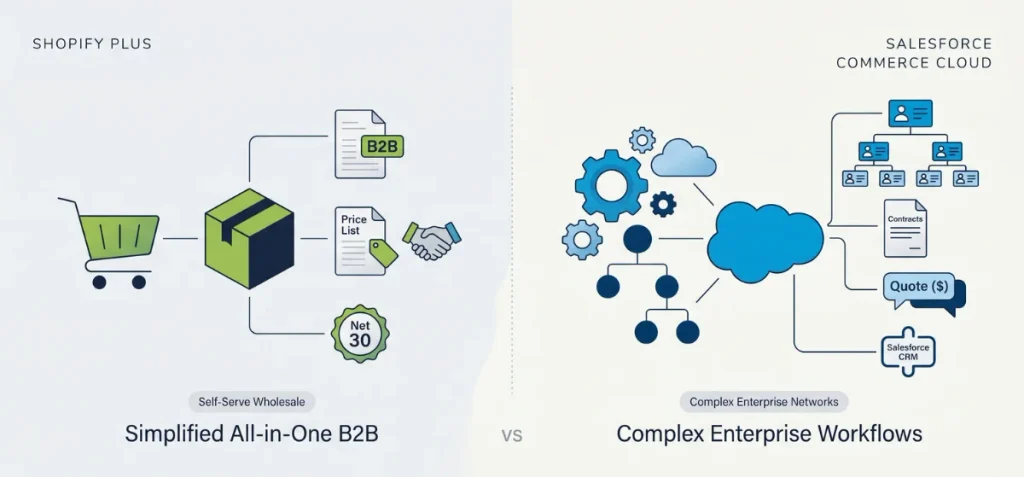
B2B commerce is very different from standard retail. Business buyers want custom price lists, net payment terms, and multiple user logins under one company account.
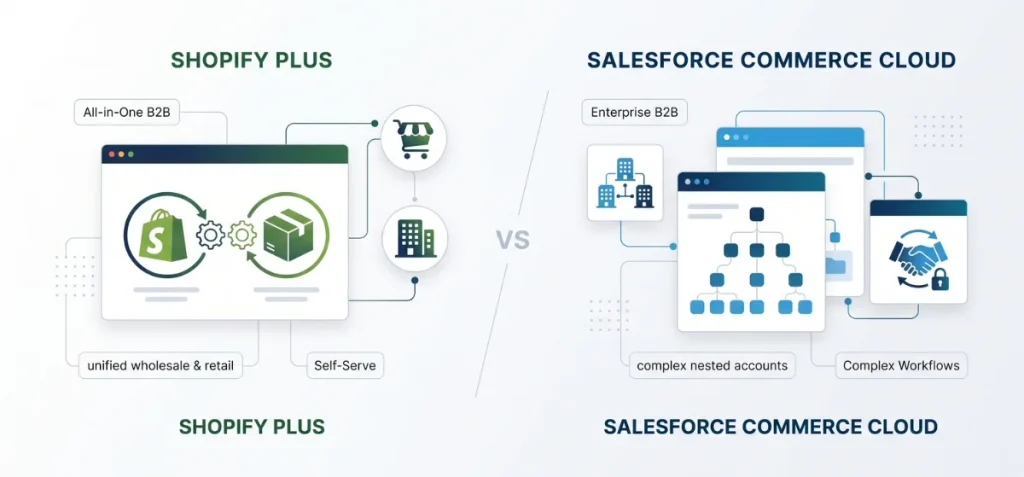
Shopify Plus lets you run your wholesale and retail operations from one single place. Salesforce Commerce Cloud handles deep corporate purchasing rules across massive sales teams.
B2B Capabilities at a Glance
| B2B Capability | Shopify Plus | Salesforce Commerce Cloud |
| Company Accounts | Yes, with multiple user locations | Yes, with nested corporate trees |
| Buyer Roles | Yes, with set buying permissions | Yes, with deep role hierarchies |
| Custom Catalogs | Unlimited custom product lists on Plus | Unlimited price books and catalog segments |
| Payment Terms | Built-in Net 15, 30, 60, and split payments | Built-in credit limits, terms, and billing logic |
| Complex Price Books | Fixed price lists and percentage rules | Deep custom price books by contract and region |
| Request for Quote (RFQ) | Built-in draft orders, apps for multi-step talks | Built-in round-trip quotes and negotiation |
| Approval Workflows | Merchant review built-in; buyer-side manager queues need apps | Built-in multi-tier buyer approval routing |
| CRM Connection | Connects using APIs, middleware, or apps | Built right into Salesforce Sales Cloud |
How B2B Works on Each Platform
Shopify Plus builds wholesale tools directly into its core admin. You do not need to build a second website to sell to business buyers.
You can create company profiles, assign custom price lists, set minimum order counts, and offer payment terms on invoices.
Buyers log into your regular store with an email code. The site automatically shows their private prices and payment rules.
While standard Shopify plans now offer basic wholesale features, Shopify Plus is required if you need unlimited custom catalogs, direct company assignments, and automated deposit terms.
Salesforce Commerce Cloud approaches wholesale from a corporate sales view. It grew out of CloudCraze and runs directly on the core Salesforce platform.
It gives you deep control over giant wholesale networks. For example, a global distributor may have hundreds of branch offices.
Each branch might have junior buyers who need manager approvals before placing orders over $10,000. SFCC manages these complex rules natively.
It also includes built-in round-trip quote tools. A buyer can request a special discount on a large cart, and a field sales rep can approve it inside Salesforce CRM on the same day.
Which Platform Is Better for Complex B2B?
The answer depends on how your buyers place orders.
Pick Shopify Plus if you sell wholesale like an online store. It is the best choice if you want wholesale clients to self-serve without calling sales reps.
It also wins if you run direct-to-consumer sales alongside wholesale and want a lean team to manage both.
Pick Salesforce Commerce Cloud if your sales deals involve long contract talks, custom procurement systems, and multiple internal sign-offs.
It is the right call when your sales teams live inside Salesforce Sales Cloud and need your web store to mirror their existing CRM deals directly.
Shopify Plus vs Salesforce Commerce Cloud Pricing and TCO
Platform pricing causes a lot of confusion. Many blogs list single dollar figures without showing where the numbers come from.
To make a smart choice, look at total cost of ownership. You need to calculate platform costs, initial builds, daily support, and staff payroll together.
Shopify Plus Pricing
Shopify publishes its platform rates clearly on its Shopify Plus pricing page. Detailed plan features can also be reviewed in the official Shopify Plus plan documentation.
Here is what Shopify Plus costs:
- Base Platform Fee: $2,300 per month on a 3-year agreement, or $2,500 per month on a 1-year agreement.
- High Volume Fee: Once your store sales pass roughly $800,000 per month, Shopify moves you to a variable revenue fee.
- Payment Fees: If you use Shopify Payments, you pay standard credit card processing rates.
If you use an outside payment gateway instead, Shopify charges an extra 0.20% per transaction to cover security and system maintenance. - Extra Store Instances: The base plan includes your main store plus up to 9 expansion stores. Extra expansion stores cost an added monthly fee.
Your total bill on Shopify Plus will also include monthly fees for third-party apps and your own design updates.
Salesforce Commerce Cloud Pricing
Salesforce doesn’t post fixed prices on its website. It uses custom, quote-based pricing for every client.
Its public Salesforce Commerce Cloud pricing page separates software packages into editions like Commerce Cloud B2C Premium and B2B Growth.
When you see articles online claiming that Salesforce costs a flat $150,000 per year, those are third-party market estimates.
They are based on past enterprise agency contracts, not an official price tag from Salesforce.
Salesforce prices its contracts through custom talks. Rates often depend on your gross merchandise value (GMV), your order volume, the number of web stores you run, and which Salesforce cloud tools you bundle together.
What Drives Total Cost of Ownership?
The sticker price is only one part of your bill. You can track your true expenses with this simple formula:
Total Cost = Platform Fee + Initial Setup + Integrations + Apps + Custom Code + Hosting (if separate) + Payment Fees + Team Salaries
The real budget difference comes down to setup, hosting, and daily upkeep:
- Cloud Hosting: Shopify Plus includes fully managed cloud hosting in its base monthly fee. You do not pay extra for server scale during busy sales peaks.
Salesforce Commerce Cloud covers hosting on standard setups. But if you build a custom headless storefront on SFCC or use legacy components, you must pay for outside cloud servers like AWS or Heroku separately. - Initial Setup: Shopify Plus launches faster with regular web agencies. Salesforce Commerce Cloud setups require certified Salesforce system integrators. These builds take longer and carry much higher agency invoices.
- Daily Upkeep: On Shopify Plus, marketing teams change promotional banners, set discounts, and create pages alone.
On Salesforce Commerce Cloud, basic store changes often require a ticket to a developer or an agency on retainer. - App Costs vs. Custom Code: Shopify uses monthly apps from its app store. Salesforce builds features through custom code cartridges. Cartridges lower your app bills, but they increase your developer hours.
Which Platform is Cheaper?
Shopify Plus is almost always cheaper for small to mid-sized enterprise brands. Its base price is public and easy to predict. It does not require a large team of full-time software engineers for routine updates.
Salesforce Commerce Cloud needs custom quote meetings from day one. Its overall cost depends on your developer count, your integration partner contract, and your custom backend rules.
Features Compared: Shopify Plus vs Salesforce Commerce Cloud
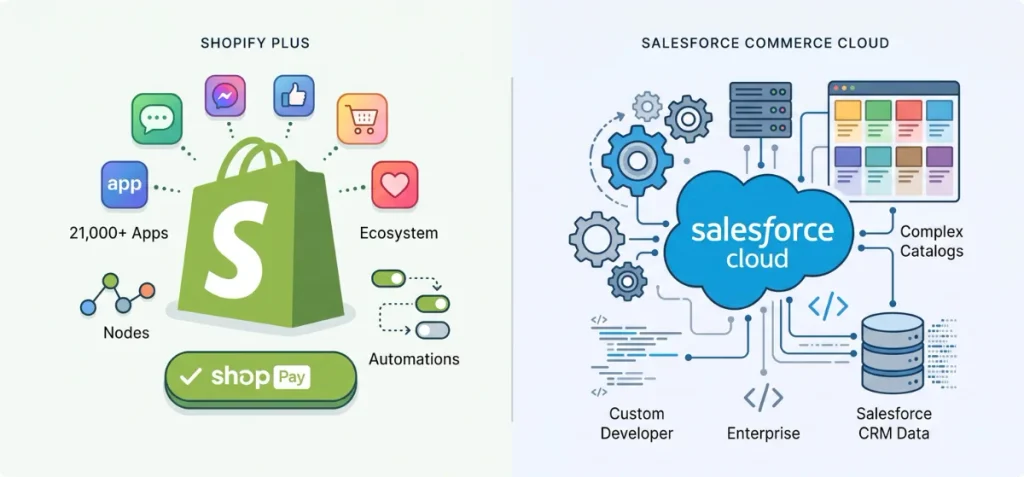
Both platforms have huge feature sets. But they handle your daily work in very different ways.
Features at a Glance
| Feature Area | Shopify Plus | Salesforce Commerce Cloud |
| Checkout & Speed | Shop Pay with one-tap checkout | Standard multi-step checkout flows |
| Product Catalogs | Simple collections and tags | Deep multi-tier visual product sorting |
| Personalization | App-driven or theme rules | Deep rules tied to Salesforce CRM data |
| App Ecosystem | 21,000+ ready apps in the store | Custom code cartridges and partner tools |
| Global Selling | Central setup with Shopify Markets | Complex multi-site setups by country |
| Automations | Visual workflows with Shopify Flow | Custom developer logic and triggers |
Checkout and Conversion
Shopify Plus puts its focus on checkout speed. Its main checkout tool is Shop Pay. Shoppers can save their card and shipping address once.
After that, they can buy with one tap across millions of stores. Brands can also change the checkout layout using Checkout Extensibility without breaking core security.
Salesforce Commerce Cloud provides a reliable checkout, but it runs on traditional web forms. It takes more clicks for buyers to finish an order.
Customizing the checkout flow on Salesforce usually requires dedicated backend developers.
Catalog and Merchandising
This is where Salesforce Commerce Cloud is very strong. It gives large brands deep visual merchandising tools.
Merchandisers on Salesforce can drag and drop items into exact grid spots. They can set rules to boost items based on inventory levels or regional sales trends. They can also manage massive catalogs across multiple sub-brands with ease.
Shopify Plus uses collections, automated tags, and product categories. It works well for most direct-to-consumer stores.
But if your brand sells 100,000 products across 20 global sister companies, Salesforce offers deeper built-in catalog control.
Personalization and Customer Data
Salesforce Commerce Cloud connects directly with tools like Salesforce Data Cloud and Marketing Cloud. Your store can change homepage banners based on customer support chats or recent sales calls.
Shopify Plus uses apps for personalization. You can plug in third-party search and recommendation tools from the app store. It is fast to set up, but it doesn’t live inside an enterprise CRM database.
Apps and Integrations
Shopify has an App Store with more than 21,000 apps. You can add product reviews, loyalty points, or live chat in minutes. Most apps install with a single click.
Salesforce uses partner cartridges and direct API integrations. These tools connect directly to your enterprise tools, like enterprise resource planning (ERP) systems. However, installing them almost always requires a developer to write and test code.
Multi-Store and International Commerce
Shopify Plus handles global trade through Shopify Markets. You can sell in different currencies and languages from one single admin panel.
You can also run up to 9 separate expansion stores under your base subscription fee.
Salesforce Commerce Cloud manages global sites with deep multi-site architecture. It is built for massive global brands that need completely separate regional catalogs, price rules, and local legal setups for each country.
Automation and Operations
Shopify Plus includes Shopify Flow. It is a visual tool that lets non-technical staff build automations.
For example, if an item drops below 5 units, Flow can email your buying team and hide the product from your store automatically.
Salesforce Commerce Cloud relies on enterprise system workflows. These automations are very powerful, but setting them up requires technical planning and software engineering support.
Customization and Architecture
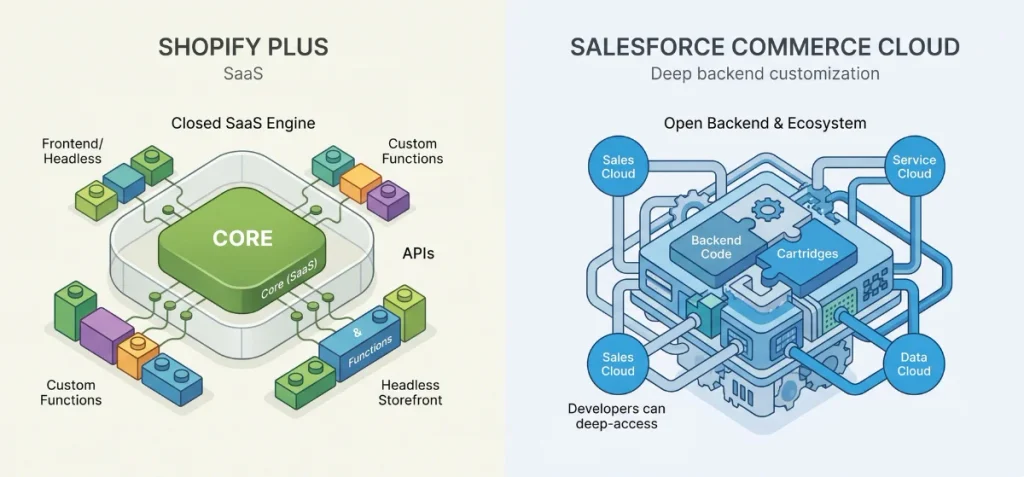
Both platforms allow custom storefronts. But they handle backend changes in very different ways.
Shopify Plus Architecture
Shopify Plus operates as a closed SaaS engine. The main database and checkout code stay protected behind secure APIs.
You build your storefront using Liquid themes and modern web components. For custom logic, you use Shopify Functions.
These functions let developers write custom discount rules, shipping logic, and checkout rules. They run directly on Shopify servers in under ten milliseconds.
If you want a totally custom frontend, you can build a headless store. Shopify offers Hydrogen, which is a React-based toolset. It pulls catalog data directly through the Storefront API.
Salesforce Commerce Cloud Architecture
Salesforce Commerce Cloud gives you deep access to backend systems. It uses storefront templates and code packages called cartridges.
Developers can write deep custom logic for product pricing, tax rules, and warehouse management. SFCC also offers composable storefront tools. You can separate the React frontend from the core backend engine.
Everything connects directly into the broader Salesforce ecosystem. If your business uses Sales Cloud, Service Cloud, or Data Cloud, SFCC shares data across these tools without third-party webhooks.
Which Platform Offers More Customization?
Salesforce Commerce Cloud offers deeper backend customization. It lets software engineers rewrite core business logic for complex retail operations.
Shopify Plus offers fast, safe frontend customization. It protects the core checkout and server rules, which keeps the store stable. But it gives developers enough API tools to solve most retail problems.
Implementation Speed and Ongoing Maintenance
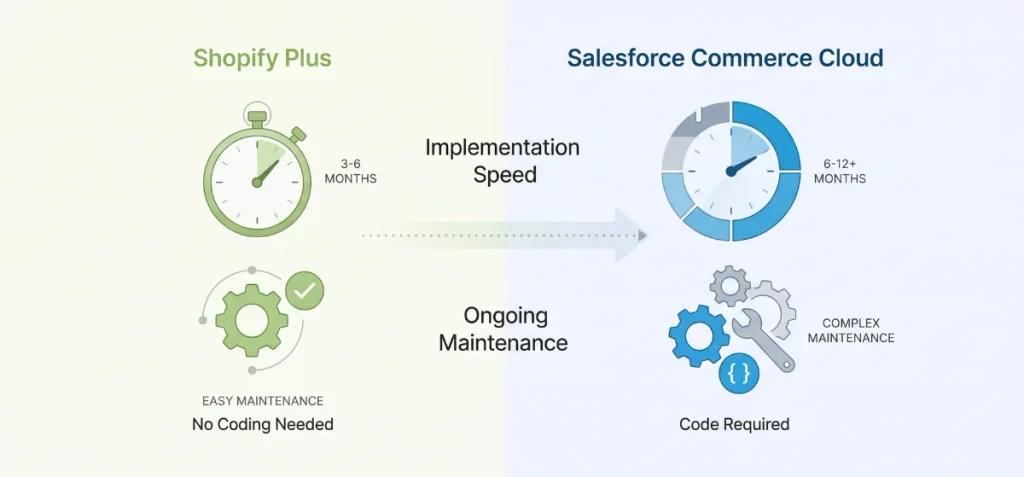
A platform build is a massive project. Setup timelines and maintenance workloads affect your business every week.
Implementation Timelines
Shopify Plus projects usually launch much faster. Standard builds take between three and six months. Teams use pre-built themes, verified App Store tools, and standard data import tools.
Salesforce Commerce Cloud builds take longer. Most enterprise projects require six to twelve months or more. You must hire a certified Salesforce system integrator.
The agency must write custom cartridges, map enterprise data, and run extensive tests before launch.
Daily Team Maintenance
Shopify Plus needs a smaller technical team. Marketing managers can build landing pages, update product tags, and run sales by themselves.
Salesforce Commerce Cloud requires ongoing software engineering support. Routine tasks like new promotion rules or layout tweaks often require a software developer.
You’ll likely keep an outside agency on a monthly retainer.
Shopify Plus vs Salesforce Commerce Cloud for SEO
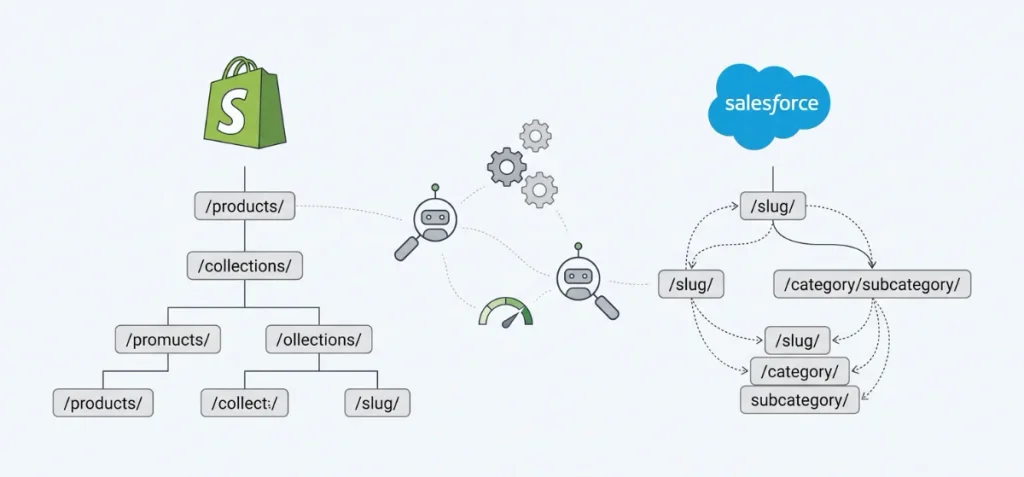
Platform choice alone doesn’t decide your organic search traffic. Search engines evaluate your technical health, page speed, content quality, and internal link structure.
But each platform handles technical search tasks differently.
Technical SEO Controls Compared
- URL Architecture: Shopify Plus uses fixed URL paths like /products/ and /collections/. You can’t remove these subfolders.
Salesforce Commerce Cloud gives you total control over your URL slugs and folder paths.
- Canonical URLs: Shopify generates duplicate product links when products sit inside collections. The platform adds canonical tags to point back to the root product URL automatically.
However, handling deep collection filters can still create crawl issues. You can read my complete Shopify Plus SEO guide to see how to structure enterprise crawl paths properly. - Faceted Navigation: Enterprise stores often use multi-select filters for size, color, and price. Salesforce lets engineers set custom indexing rules for dynamic parameter URLs.
On Shopify, faceted filters can create thousands of duplicate pages if not controlled with canonical tags. I break down exact crawl rules in my guide on Shopify faceted navigation SEO. - Site Speed: Shopify Plus hosts all images on global fast content delivery networks (CDNs).
It also manages server speed during traffic spikes. Salesforce stores run very fast too, but heavy custom cartridges can slow down page responses if developers do not clean up legacy code.
- Platform Migrations: Migrating between these systems requires careful redirect mapping. A bad migration breaks backlinks and drops organic traffic.
If you plan to switch to Shopify, you must avoid common Shopify SEO problems like broken redirects, loop errors, and missing structured data.
Neither system gives you top search ranks right out of the box. Both platforms require deliberate technical optimization.
You can check out my step-by-step walkthrough on how to get a Shopify store to rank and build an effective keyword strategy for retail stores.
Which Platform Should I Choose?
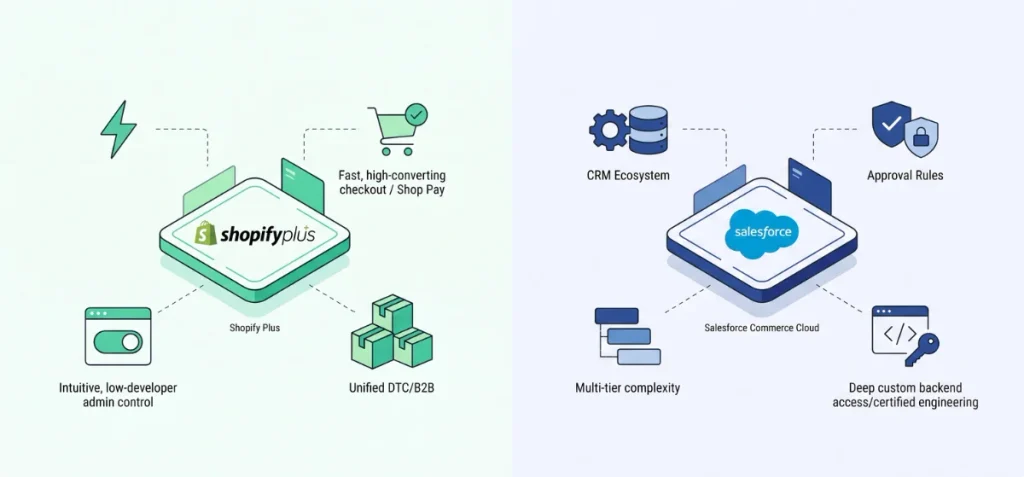
Pick your platform based on your daily operations, your tech team, and your existing software stack. Revenue volume alone should not dictate this choice.
Platform Decision Matrix
| Your Business Situation | Recommended Platform |
| Direct-to-consumer retail brand | Shopify Plus |
| Fast-growing brand with lean tech staff | Shopify Plus |
| Retail store with simple wholesale operations | Shopify Plus |
| Global brand with unified product catalogs | Shopify Plus |
| Enterprise brand heavily invested in Salesforce CRM | Salesforce Commerce Cloud |
| Company with multi-level buyer approval rules | Salesforce Commerce Cloud |
| Brand with complex, multi-tier catalog rules | Salesforce Commerce Cloud |
| Company that wants low daily developer dependency | Shopify Plus |
| Enterprise that needs custom backend code modifications | Salesforce Commerce Cloud |
Choose Shopify Plus When:
- You want marketing and product teams to update the site without waiting for developers.
- You want a high-converting checkout that uses Shop Pay for one-tap mobile sales.
- You prefer predictable software costs with cloud hosting included in your base fee.
- You plan to run direct-to-consumer retail and wholesale from one shared admin dashboard.
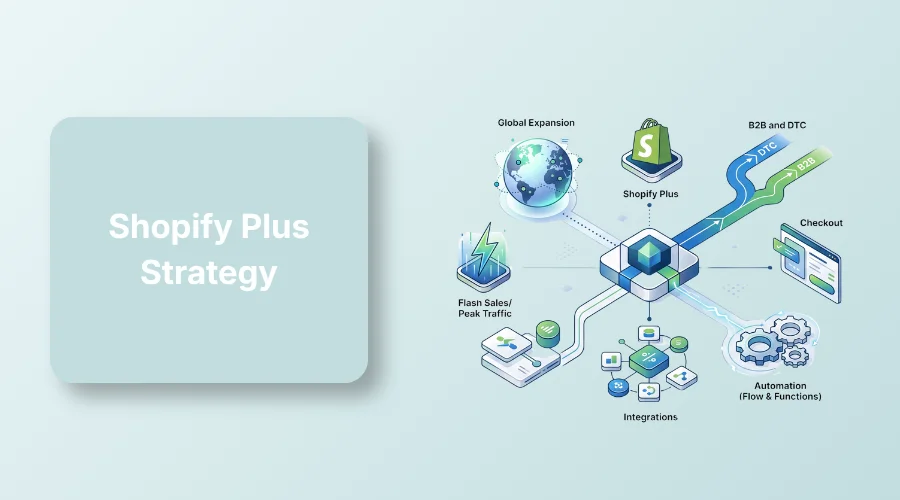
- You want to plan your rollout using a lean Shopify Plus strategy that focuses on fast launch dates and simple daily operations.
Choose Salesforce Commerce Cloud When:
- Your corporate sales and customer support teams already live inside the Salesforce ecosystem.
- Your business requires custom price books, custom buyer roles, and multi-tier approval rules on enterprise deals.
- Your merchandisers require deep, manual control over visual sorting rules across dozens of regional websites.
- Your company has the budget to retain certified system integrators and software engineers for daily site management.
- You need deep custom code access to rewrite backend business logic across complex supply chains.
Final Verdict
This Shopify Plus vs Salesforce Commerce Cloud comparison comes down to how your team works.
Shopify Plus is the top choice for direct-to-consumer brands. It delivers high checkout sales, fast setups, and low daily maintenance.
Salesforce Commerce Cloud fits massive global enterprises. It works best if you rely on Salesforce CRM and need deep corporate buyer rules.
FAQs
Which CRM Works Best with Shopify?
The best Shopify CRM depends on your goals: Klaviyo leads for DTC retention, Omnisend offers affordable automation, HubSpot unifies multi-channel marketing and support, and Pipedrive excels at visual sales pipelines.
Who is Salesforce’s Biggest Competitor?
Microsoft Dynamics 365 stands as Salesforce’s primary enterprise competitor. Leading alternatives include HubSpot for intuitive SMB marketing, Zoho CRM for affordable depth, and Oracle and SAP for large-scale enterprise deployments.
Does Shopify Use Salesforce?
Salesforce integrates with Shopify via AppExchange connectors, middleware like MuleSoft, or custom APIs to sync customers, orders, catalogs, and inventory in real time.