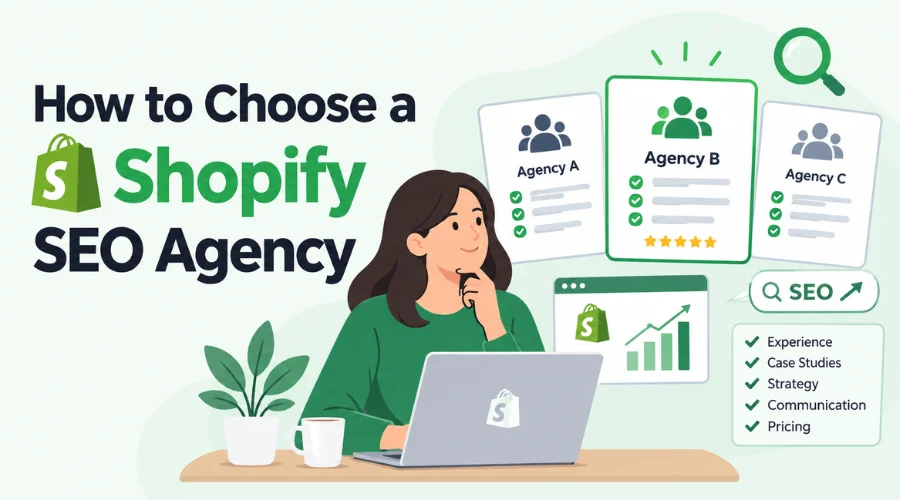
Choose a Shopify SEO agency by vetting platform-specific technical literacy and commercial-intent strategies. Prioritize partners who optimize collection and product pages for revenue, target modern AI search engines, improve Core Web Vitals, and offer transparent, deliverable-focused retainers.
You need to know how to choose a Shopify SEO agency when your store struggles to get steady organic sales. You launch great products, but your site stays hidden on Google.
General marketing teams often make this worse. They treat your store like a basic blog. They ignore broken collection filters, duplicate code, and weak product copy that drive buyers away.
This guide gives you the fix. You’ll find the 15 key benchmarks to pick the right partner, questions to ask, service costs, and red flags to avoid.
What Does a Shopify SEO Agency Actually Do?
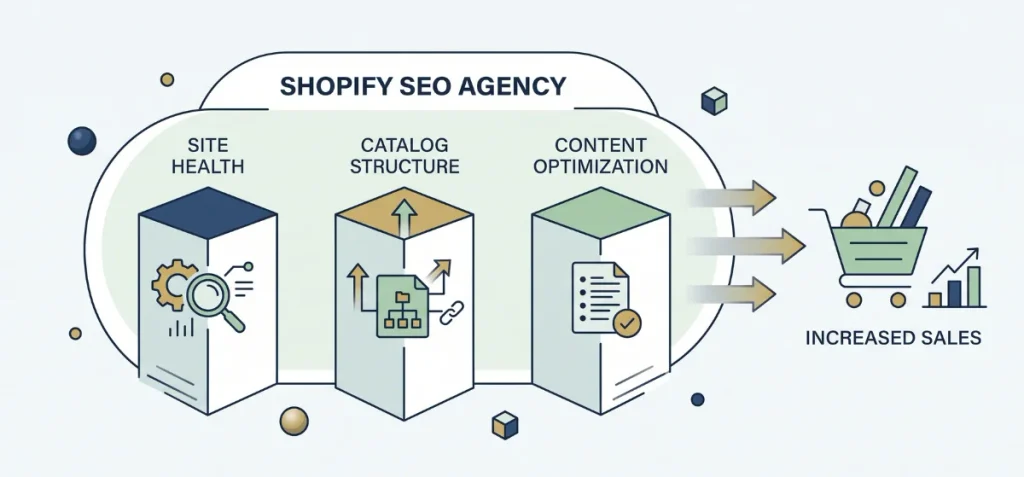
A competent agency improves your store’s search visibility across the shopping process. They do not stop at basic metadata edits. They fix theme code, improve catalog structure, and refine product sales copy.
Core deliverables include:
- Technical site health: They audit theme files and manage collection filters. They clear redirect chains. They improve Core Web Vitals to keep search crawlers focused on pages that sell.
- Architecture and internal links: They organize menus, breadcrumbs, and category levels. Both search bots and shoppers reach top products in fewer clicks.
- On-page catalog updates: They write clear product titles. They write descriptive body copy and category headers matched to purchase terms.
- Informational content planning: They build buying guides, product face-offs, and category overviews. These articles send search authority straight to related collection pages.
- Indexation control: They configure the robots.txt file, canonical rules, and sitemaps. They add structured data tags like Product, Offer, and BreadcrumbList for rich search snippets.
What Copten Writer Does
Copten Writer ties search tasks directly to store revenue. The team doesn’t treat organic traffic as an isolated task. They cover several related areas:
- Technical and on-page Shopify SEO.
- Product and collection page copywriting.
- High-intent commercial content.
- AI search and LLM optimization.
- Conversion rate optimization (CRO).
- Google and Meta paid ads.
This mix helps new visitors locate the right items and buy them instead of leaving.
Why Choosing a Shopify SEO Agency is Different from Selecting a General SEO Agency

A general SEO provider works across blogs, lead forms, and corporate sites. They often treat every platform like WordPress.
Shopify works differently. The platform has its own structure, rules, and limits:
- Fixed URL paths: Shopify forces URLs into strict paths like /products/ and /collections/. A team must know how to build search authority within these set patterns.
- Faceted navigation: Product filters by size, color, or price create thousands of duplicate URLs. If left unmanaged, search engines waste time crawling low-value filter combinations.
- Variant architecture: Multi-variant items can generate duplicate copy across separate URLs or hide key keywords inside JavaScript selectors.
- Theme code and app weight: Every installed app injects extra script tags into the theme. A specialist knows how to identify bloated apps and protect mobile speed.
- Ecommerce conversion flows: Traffic must reach clean product pages with strong trust signals and quick checkout routes.
A generalist agency often defaults to writing top-of-funnel blog posts. That strategy brings page views, but page views do not guarantee orders.
A platform specialist focuses on collection structures, product descriptions, and technical indexation rules first.
This distinction is why working with a dedicated partner matters. Copten Writer, for example, focuses specifically on Shopify stores and e-commerce brands.
The team builds search plans around store architecture instead of treating Shopify like a standard blogging platform.
Start by Finding Your Store’s SEO Problem
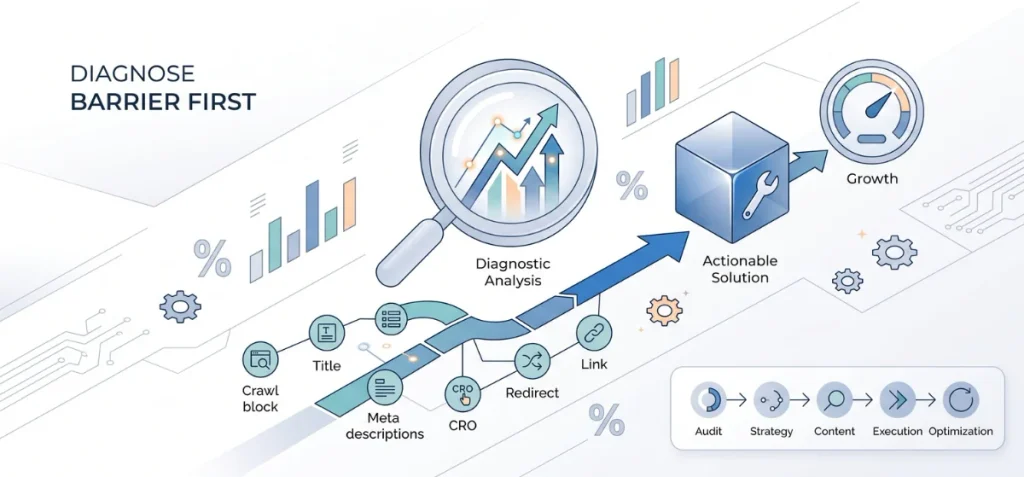
Agencies often pitch pre-packaged services before looking at your store data. That wastes money.
You should diagnose your primary traffic or sales barrier first, then pick a partner equipped to solve it.
Use this diagnostic table to identify where your organic funnel breaks:
| Symptom | Probable Cause | What Your Agency Must Fix |
| Low organic impressions | Crawl blocks, thin collection pages, or unindexed URLs | robots.txt, sitemap files, canonical setup, and collection copy |
| Impressions rise, but clicks stay flat | Weak page titles, poor meta descriptions, or missing rich snippets | Title rewrites, structured data schemas (Product, Offer, Reviews) |
| High organic traffic, but low conversion | Informational search intent mismatch or weak product-page copy | Commercial keyword alignment, product copywriting, and CRO |
| Drops after theme updates or app removals | Broken redirects, slow mobile page speed, or leftover JavaScript | Theme code audits, 301 redirect mapping, and speed cleanup |
| Blog brings visitors, but collections remain unranked | Missing internal links from content to commercial catalog pages | Topic clusters, contextual product links, and collection architecture |
Why This Matters When Choosing an Agency
A competent team analyzes your store before proposing a scope of work.
They check Google Search Console metrics, catalog structure, and checkout drop-offs to find real growth opportunities.
This diagnostic approach aligns with the published workflow at Copten Writer:
- Audit & Analysis: Inspect the technical setup, audience signals, competitors, and revenue gaps.
- Strategy Development: Build an actionable roadmap targeting commercial search queries.
- Content Creation: Produce clear, conversion-ready copy for products, collections, and articles.
- Campaign Execution: Implement technical fixes, structured data, and on-page updates.
- Performance Monitoring: Track organic keyword positions, indexing health, and click metrics.
- Optimization & Scale: Refine high-opportunity pages to lift sales and average order values.
A structured roadmap ensures that every technical change and content update serves a measurable commercial goal.
15 Criteria for Choosing a Shopify SEO Agency
Use these 15 benchmarks to separate genuine e-commerce specialists from general providers.
1. Shopify-Specific Experience
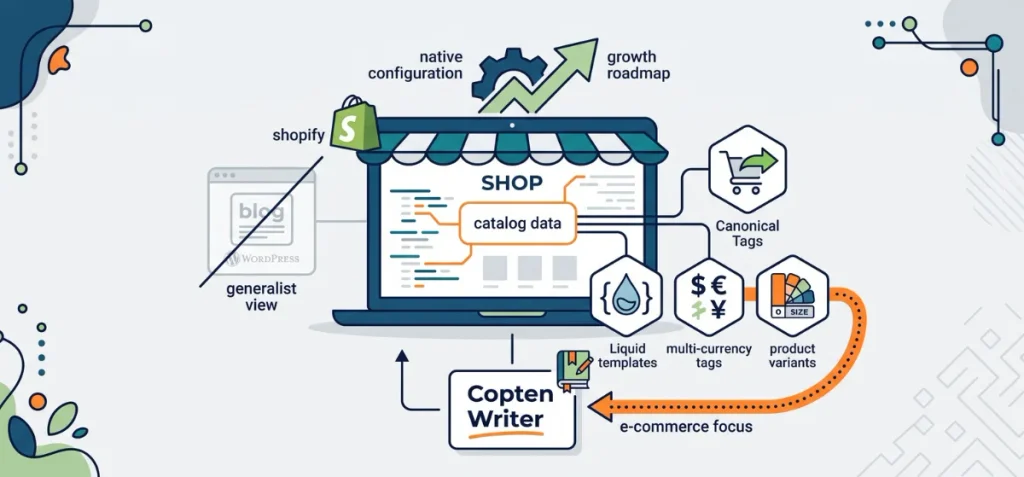
Most agencies understand standard web SEO, but Shopify brings a distinct set of technical constraints.
A generalist often treats a store like a WordPress blog, while an e-commerce specialist focuses on how the platform handles catalog data under the hood.
Check whether the team has direct experience with Liquid templates, theme asset directories, and native e-commerce configurations.
They must know how Shopify manages multi-currency canonical tags, product variant switches, checkout routes, and platform updates.
Why Copten Writer fits: Copten Writer focuses on Shopify stores and e-commerce brands rather than generic websites.
You can learn more about Copten Writer’s Shopify experience to see how the team builds growth roadmaps around these platform requirements.
2. Technical Shopify SEO Expertise
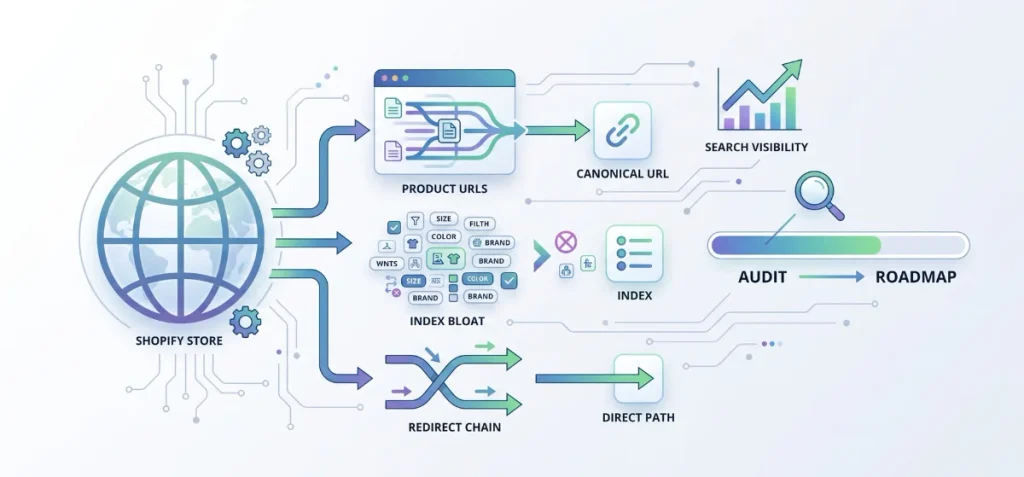
Default Shopify store setups cause specific crawling conflicts. A reliable agency knows how to spot these platform-level flaws and fix them before they harm search performance.
Your agency must know how to resolve:
- Duplicate product URLs created by collection pathways.
- Canonical tag misalignments across multi-currency store versions.
- Index bloat caused by faceted product filters (size, color, brand).
- Redirect chains created after catalog edits.
- Slow mobile load times caused by residual scripts from uninstalled apps.
Read my guide on common Shopify SEO problems to see how these platform flaws reduce search visibility.
The Copten Writer approach: SEO work must begin with a thorough store audit, not a random list of blog posts.
Copten Writer inspects brand positioning, technical architecture, and competitor gaps before building an optimization roadmap.
3. Product and Collection SEO
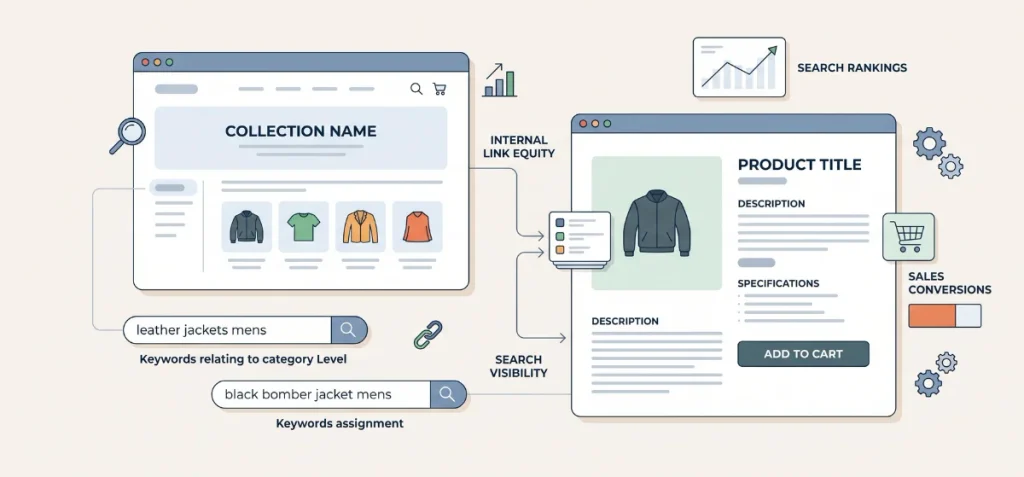
Collection and product pages generate direct e-commerce sales. If an agency focuses only on informational articles, look elsewhere.
Your agency must know how to:
- Assign high-intent commercial keywords to main categories and sub-collections.
- Rewrite product titles to match real buyer queries.
- Create detailed, original product copy that search engines index cleanly.
- Pass internal link equity from top collections down to individual SKUs.
Review my breakdown on Shopify product title SEO or use our Shopify SEO word counter to check your product page depth.
The Copten Writer approach: Copten Writer produces SEO-driven copy for products and collections. The team focuses on search rankings and sales conversions at the same time.
4. Keyword Research and Search Intent
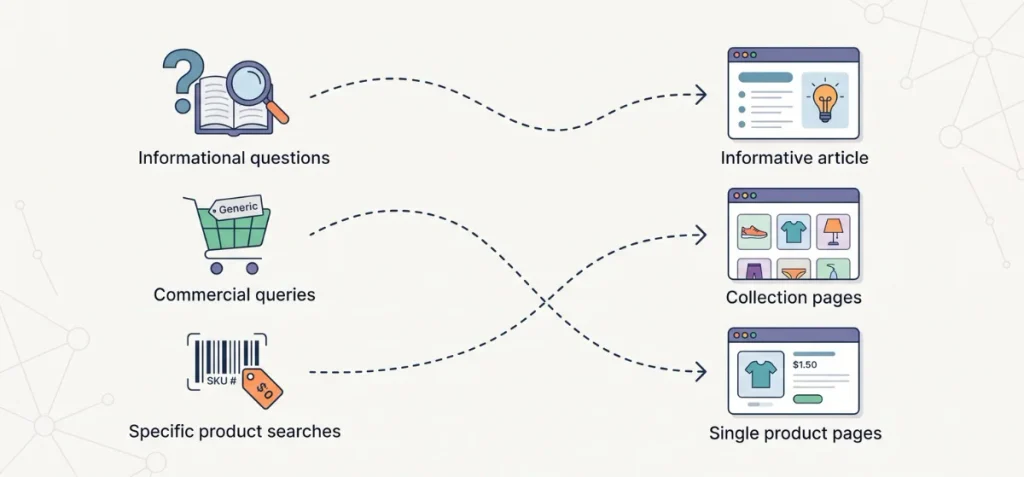
Search volume means nothing if incoming visitors have no intention to purchase. A competent partner separates top-of-funnel research questions from direct buying intent.
The agency must map:
- Informational questions to informative articles and tutorials.
- Category-level commercial queries to collection pages.
- Specific product searches to single item pages.
Read my guide on how to add keywords to a Shopify website to see proper on-page keyword placement in action.
5. Content That Supports Commercial Pages

Many providers produce dozens of articles that generate zero sales. Traffic metrics look great on paper, but pageviews do not pay for store inventory.
Informational content must connect directly to your commercial catalog:
- Product comparison articles must link straight to the evaluated product pages.
- Buyer guides must funnel shoppers into relevant collections.
- Problem-solving tutorials must show real solutions available in your store.
Read my guide on how to get Shopify to rank for keywords to learn how internal links pass ranking authority across a store.
The Copten Writer Approach: Copten Writer designs content that builds topical authority while sending qualified shoppers straight to product and collection pages.
6. Product Copywriting Capability
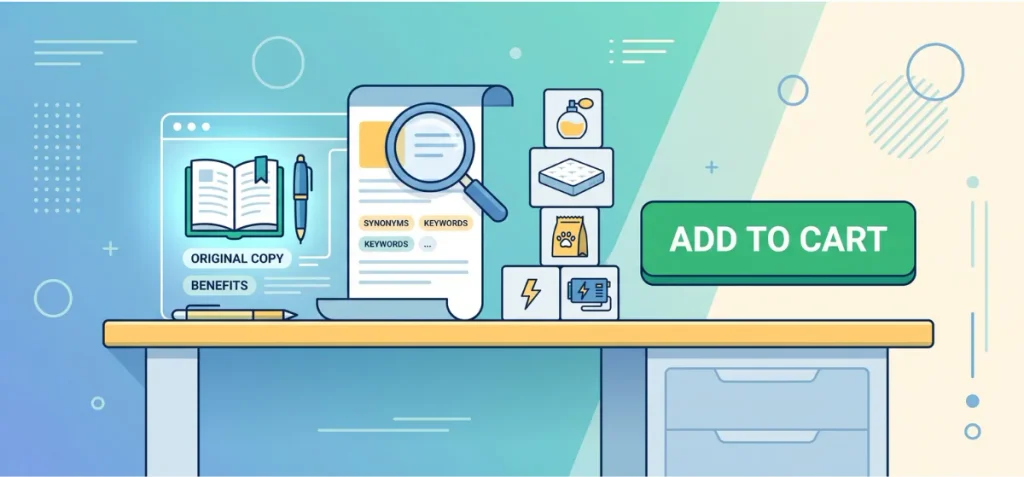
Product descriptions require persuasion and search precision at the same time. Many agencies copy manufacturer bullet points, which creates duplicate content penalties and kills search performance.
A qualified team writes original product copy that:
- Explains real customer benefits alongside technical specifications.
- Uses relevant product synonyms and attribute keywords naturally.
- Matches your brand voice across every SKU.
- Directs shoppers straight to the add-to-cart button.
Evidence in practice: Copten Writer provides real samples across multiple product categories, including luxury perfumes, mattresses, pet foods, and power inverters.
You can view Copten Writer’s Shopify product-copy portfolio to see actual e-commerce copywriting work.
7. AI Search and LLM Visibility

Search behavior extends beyond standard blue links. Shoppers now discover products directly inside Google AI Overviews, ChatGPT, Perplexity, and Claude.
An up-to-date agency optimizes your store for generative search engines by:
- Structuring clear entity definitions, brand facts, and product attributes.
- Adding a complete JSON-LD schema (Product, Offer, Brand, AggregateRating).
- Securing brand mentions and citations across authoritative third-party sites.
- Answering common pre-purchase questions clearly within the page content.
The Copten Writer approach: Copten Writer provides dedicated AI and LLM optimization services.
The team structures product facts, technical data, and catalog copy so modern answer engines can cite your brand.
8. Ecommerce SEO Beyond Google Rankings

Organic traffic represents only one part of a profitable store. A capable agency understands how search visibility connects to the broader purchase experience.
The team should inspect:
- Google Merchant Center product feed accuracy and error logs.
- Organic revenue trends alongside average order value (AOV).
- Conversion rate optimization (CRO) factors on top search landing pages.
- Trust signals, mobile layout issues, and checkout steps.
The Copten Writer approach: Copten Writer connects search strategy directly to conversion rate optimization and paid ads.
This broad focus ensures search visitors land on pages designed to turn clicks into completed sales.
9. Proven Results and Case Studies
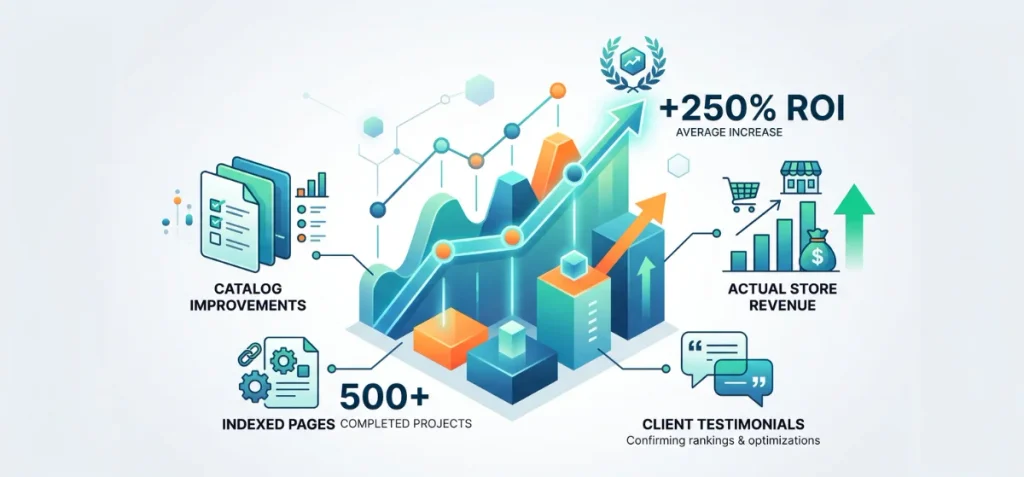
Empty guarantees and vague traffic screenshots signal poor agency quality. You need clear documentation showing real catalog improvements, indexed pages, and client outcomes.
Inspect client reviews and project summaries for specific details:
- Did the agency lift rankings for competitive commercial terms?
- Did the team fix real catalog structure problems?
- Did their optimizations produce actual store revenue?
The Copten Writer approach: Copten Writer reports over 500 completed projects and highlights an average 250% ROI increase across client accounts on its site.
The agency also displays client testimonials confirming improvements in search rankings, product descriptions, and on-page optimization.
10. A Complete Growth Process
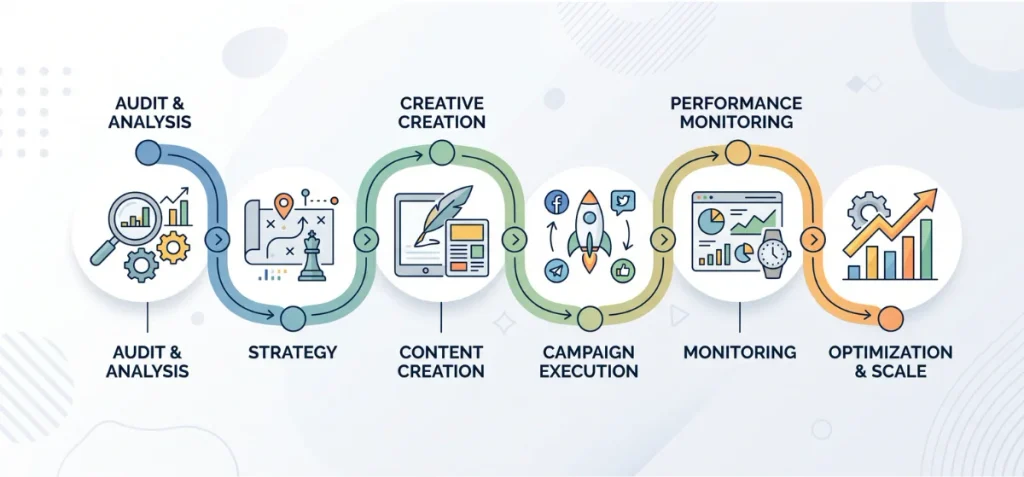
Never hire a team that improvises their monthly tasks. Reliable agencies rely on a clear, structured sequence that moves from discovery to execution.
Their roadmap should include:
- Complete technical store audit.
- Prioritized action plan for high-margin pages.
- Scheduled production of product copy and commercial articles.
- Regular performance reviews and strategy adjustments.
The Copten Writer approach: Copten Writer relies on a published six-stage workflow: Audit & Analysis, Strategy Development, Creative Content Creation, Campaign Execution, Performance Monitoring, and Optimization & Scale.
This process keeps every optimization aligned with concrete revenue targets.
11. Reporting and Measurement
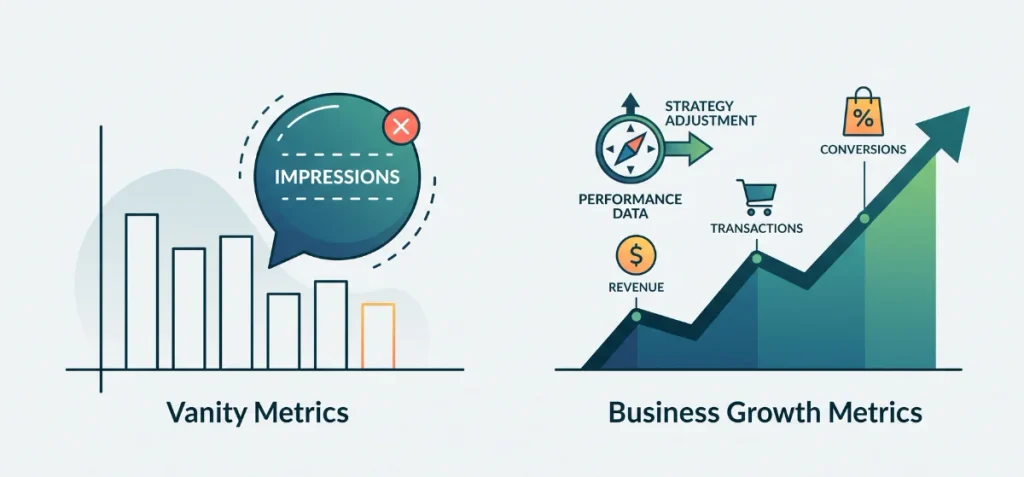
Avoid agencies that only send vanity reports filled with total impressions or obscure ranking averages. These numbers look impressive on a dashboard, but they do not show store performance.
Require metrics that reflect real business health:
- Organic revenue, conversion rates, and transaction counts.
- Organic clicks to commercial collections and product URLs.
- Keyword position shifts for high-intent purchase queries.
- Completed technical implementations and indexed URL counts.
The Copten Writer approach: Copten Writer bases client campaigns on continuous performance data, live search analytics, and iterative improvements.
Strategy adjustments respond to real sales numbers rather than hollow impression spikes.
12. White-Hat SEO
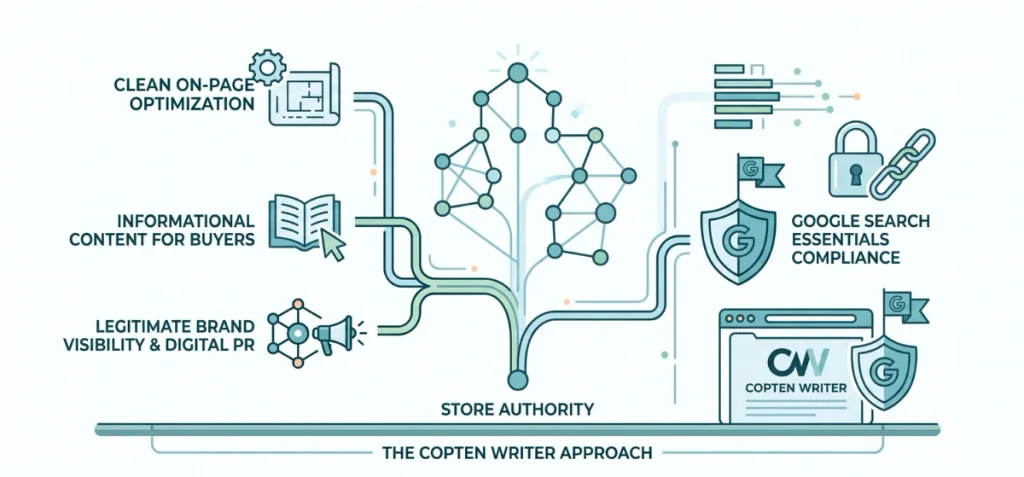
Search shortcuts cause temporary ranking spikes and long-term search penalties. Avoid agencies that propose private blog networks (PBNs), automated link schemes, spun content, or hidden text.
A reputable agency focuses on:
- Clean on-page optimization for collections and product pages.
- Informational content written specifically for real buyers.
- Legitimate brand visibility and genuine digital PR outreach.
- Strict compliance with Google Search Essentials guidelines.
The Copten Writer approach: Copten Writer relies on manual, white-hat techniques that protect store authority and support sustainable search growth over the long run.
13. Can the Agency Help Beyond SEO?

Stores rarely suffer from search issues in isolation. A high-ranking collection page still fails if the product descriptions are weak or the checkout flow creates friction.
Ask whether the agency can assist with related store needs:
- Rewriting low-converting product descriptions.
- Testing on-page layout adjustments to lift checkout rates.
- Coordinating search keyword data with paid search campaigns.
The Copten Writer approach: Copten Writer packages Shopify search optimization alongside product copywriting, commercial content, conversion rate optimization, and paid acquisition.
This structure allows the team to fix traffic and conversion problems at the same time.
14. Direct Access and Personalized Strategy
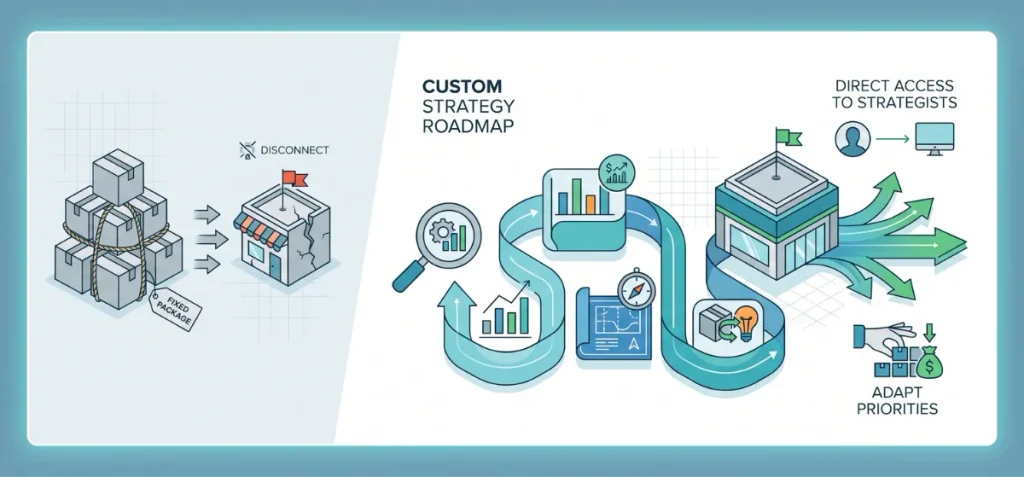
Cookie-cutter retainers deliver poor outcomes. Your store operates with specific margins, inventory constraints, and target buyers.
Look for a partner that:
- Provides direct access to the strategists doing the work.
- Adapts priorities based on your available budget and inventory levels.
- Incorporates your internal product knowledge into the strategy.
The Copten Writer Approach: Copten Writer creates custom strategy roadmaps based on each client’s specific business goals rather than using fixed service bundles.
Learn more about the team’s strategy approach to see how campaigns are built around individual store requirements.
15. Long-Term Shopify Growth Partner
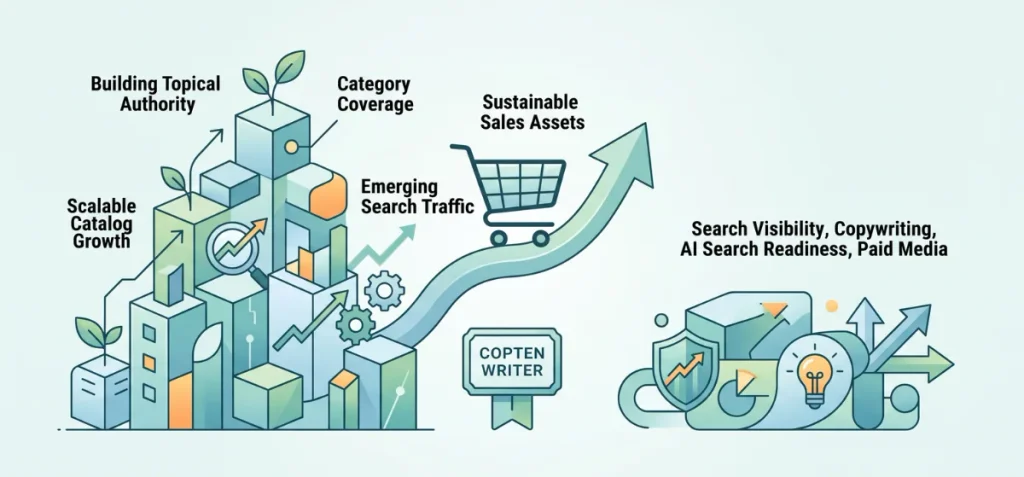
Quick fixes on title tags only handle immediate site debt. A dependable partner helps build topical authority that expands across your store catalog as your business scales.
Your agency should help with several key tasks:
- Expand category coverage as new products and collections launch.
- Spot emerging buyer searches before your competitors notice them.
- Turn high-traffic product pages into reliable sales assets.
The Copten Writer Approach: Copten Writer serves as an ongoing e-commerce marketing partner.
The team pairs search visibility with persuasive copywriting, AI search readiness, and paid media to support sustainable store growth.
Explore Copten Writer’s full Shopify services to see how the team builds growth campaigns for e-commerce brands.
Why Copten Writer is a Strong Choice for Shopify SEO

You need a team built for your platform. Most agencies treat Shopify like a regular blog site. That mistake creates major blind spots in your catalog code and product copy.
Copten Writer built its services around Shopify stores and e-commerce brands. The team combines technical fixes, product copy, search content, AI visibility, and conversion improvements under one roof.
Here’s how Copten Writer matches the evaluation criteria:
| What to Look For | How Copten Writer Fits |
| Shopify focus | Works specifically with Shopify stores and e-commerce brands. |
| Technical + content SEO | Delivers full-scale technical audits, canonical fixes, and catalog optimization. |
| Product SEO | Writes search-focused copy for products and collections to help SKUs rank and sell. |
| Ecommerce content | Creates buying guides, product comparisons, and articles tied to catalog pages. |
| AI search readiness | Provides dedicated AI and LLM optimization for Google AI Overviews, ChatGPT, and Perplexity. |
| Conversion focus | Integrates conversion rate optimization (CRO) so search visits turn into purchases. |
| Paid acquisition | Manages Meta and Google Ads to support organic search campaigns. |
| Clear process | Follows a six-step workflow: Audit, Strategy, Content, Execution, Monitoring, and Scale. |
| Verified evidence | Shares a published portfolio across multiple product niches alongside client reviews. |
| Sustainable approach | Relies on manual, white-hat tactics backed by store performance data. |
This alignment saves you time and money. You do not need to juggle one contractor for technical fixes, another for product copy, and a third for paid ads. Copten Writer connects these tasks into a single plan.
Every product description, category title, and buyer guide targets clear revenue goals. The team focuses on high-intent search terms that attract real buyers instead of passive readers.
Talk to the Copten Writer team about your store to discuss your catalog and see how a custom search strategy can grow your organic sales.
Copten Writer vs. a General SEO Agency

General agencies work across many industries. They balance dental clinics, software firms, and local contractors.
This broad approach often fails on e-commerce platforms because online stores rely on specific catalog mechanics.
A comparison highlights the practical differences:
| Capability | General SEO Agency | Copten Writer |
| Shopify architecture | Varies by account manager | Core daily focus |
| Product page SEO | Often limited to basic metadata | Full product descriptions and technical attributes |
| Collection page SEO | Often treated as standard blog archives | Strategic category architecture and keyword mapping |
| Ecommerce copywriting | Usually outsourced to freelance copywriters | In-house commercial copy tailored for conversions |
| Conversion rate optimization (CRO) | Rarely included in basic retainers | Integrated directly into page-level optimizations |
| AI and LLM optimization | Often limited or completely absent | Dedicated service for ChatGPT, Claude, and Google AI |
| Paid acquisition support | Typically billed as a separate department | Coordinated alongside organic search efforts |
| Strategic focus | Traffic volume and vanity impressions | Catalog revenue, orders, and average order value |
Merchants need more than broad traffic numbers. You need visitors who browse collections, inspect product variants, and complete checkouts. Copten Writer designs campaigns around that exact ecommerce buyer path.
How to Know Whether Copten Writer is Right for Your Shopify Store

Honest alignment matters more than a quick sale. The wrong partnership wastes budget and stalls store progress.
Review these points to see if Copten Writer matches your store goals.
Copten Writer is a Strong Fit If:
- You run a Shopify store and want a partner who knows platform constraints.
- You need both search visibility and persuasive commercial content.
- Your product pages have weak copy that hurts search rank and checkout rates.
- You care about conversions and revenue rather than hollow traffic numbers.
- You want to prepare your catalog for AI search engines like ChatGPT and Google AI Overviews.
- You prefer one dedicated team across SEO, content, CRO, and paid media.
Copten Writer May Not Be the Right Fit If:
- You only want a small, one-time fix for a broken meta tag.
- You need a narrow one-off task without an ongoing growth plan.
- You already have a full internal e-commerce marketing team that handles daily execution.
If your store needs a comprehensive e-commerce growth engine, contact Copten Writer today to discuss your catalog and growth roadmap.
Questions to Ask Before Hiring Any Shopify SEO Agency

Interview potential partners carefully before you sign any contract. These direct questions will help you uncover their true technical depth, ecommerce experience, and work methods.
1. Do You Have Direct Experience with Shopify Product and Collection Pages?
Ask for live examples of product copy and collection layouts the agency has optimized.
Many teams know how to rank a standard blog post, but they struggle to optimize commercial catalog pages without hurting the user experience.
Copten Writer perspective: Copten Writer provides a published portfolio with hands-on product copy samples across multiple e-commerce categories, from luxury goods to technical equipment.
2. How Do You Resolve Shopify-Specific Technical Issues Like Duplicate URLs and Faceted Navigation?
Require the agency to explain how they handle collection-based product URLs, multi-currency canonical tags, and tag-based filter bloat. A vague answer usually means the agency lacks platform-specific technical depth.
Copten Writer perspective: Copten Writer audits store architecture, theme files, and URL structures on day one to eliminate duplicate paths and crawl bloat before deploying new content.
3. Can You Optimize My Store for AI Search Engines and Answer Bots?
Find out whether the agency optimizes for modern generative platforms like ChatGPT, Google AI Overviews, and Perplexity. Modern shoppers use conversational tools to compare products and ask buying questions.
Copten Writer perspective: Copten Writer offers AI and LLM Optimization as a dedicated service, structuring product entities and catalog schema so AI engines can reference your brand.
4. Can You Help Improve Our Store Conversion Rates Alongside Traffic Growth?
Look for an agency that cares about completed purchases. High search traffic means little if your product pages fail to persuade visitors to click the checkout button.
Copten Writer perspective: Conversion rate optimization (CRO) comes integrated directly into Copten Writer’s ecommerce service, ensuring landing pages turn organic visitors into buyers.
5. Do You Handle Commercial Copywriting In-House, or Do You Outsource It?
Clarify who actually writes your product descriptions and buying guides. Inexperienced third-party writers often fail to grasp brand tone or platform technical requirements.
Copten Writer perspective: Copten Writer produces all commercial copy in-house, balancing persuasive sales copy with targeted search intent for every SKU and category.
6. What Metrics Will You Report Each Month?
Demand reports centered on commercial results. Reject providers that only highlight total impressions or broad keyword counts while ignoring store revenue.
Copten Writer perspective: Copten Writer tracks organic revenue, transaction counts, high-intent keyword movements, and catalog indexation health to measure real business progress.
How Much Does a Shopify SEO Agency Cost?
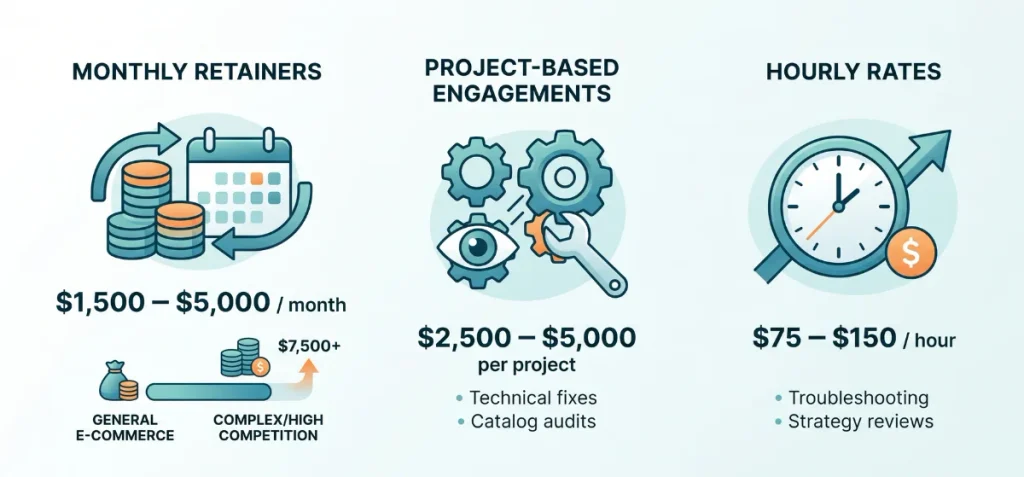
Pricing for Shopify SEO varies widely across the industry. Most service agreements fall into three primary engagement models:
- Monthly Retainers: Specialized e-commerce agencies typically charge between $1,500 and $5,000 per month.
Complex catalogs, high competition, and custom development needs can push retainers past $7,500 monthly.
- Project-Based Engagements: One-time technical fixes or full-catalog audits usually range from $2,500 to $5,000.
- Hourly Rates: Independent specialists and agencies consult at $75 to $150 per hour for technical troubleshooting or strategy reviews.
Pricing scales based on catalog size, technical store condition, and whether the scope covers product copywriting alongside technical fixes.
Want a Shopify SEO strategy before committing to a long-term agency?
Get a free audit from Copten Writer and identify the biggest SEO opportunities in your store first. Claim your free store audit here.
Shopify SEO Agency Red Flags
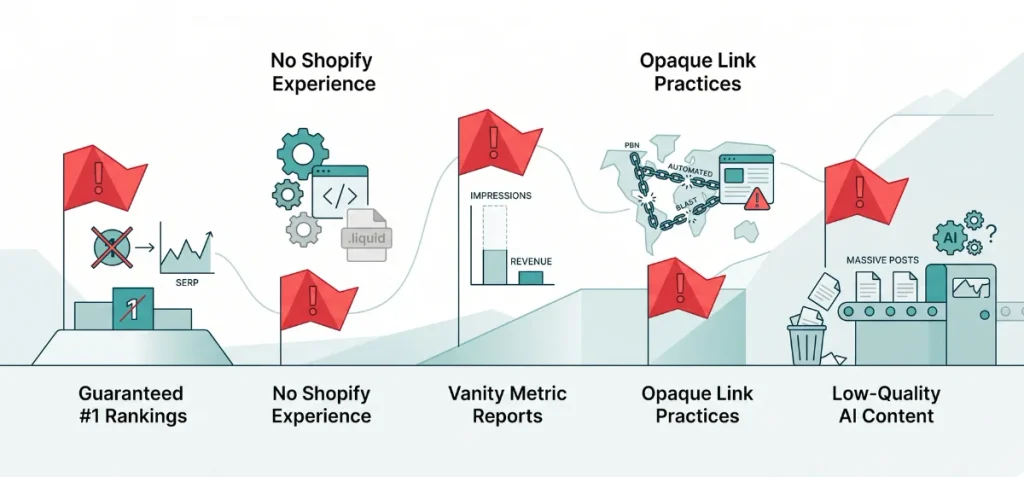
Watch for clear warning signs during discovery calls. These common red flags indicate poor agency quality or risky execution methods:
Guaranteed #1 Rankings: Search algorithms update constantly, and search engines do not sell organic rankings. Legitimate agencies guarantee effort, process, and strategy, never specific rank positions.
No Hands-on Shopify Experience: Many teams know how to run WordPress plugins, but they lack technical knowledge of Liquid files, Shopify URL structures, and multi-currency canonical tags.
Vanity Metric Reports: Agencies that focus entirely on raw impressions or obscure keyword counts often hide poor traffic quality and flat revenue numbers.
Opaque Link Practices: Private blog networks (PBNs), automated link blasts, and paid link directories risk manual penalties that can remove your store from search indexes.
Low-Quality AI Content: Massive drops of generic, unedited AI text clutter product pages and fail to address buyer intent.
Long Lock-in Contracts Without Deliverables: Beware of six-month or twelve-month agreements that fail to define specific monthly deliverables, audits, and content quotas.
These red flags are also why Copten Writer emphasizes data-driven analysis, white-hat methods, and continuous optimization rather than shortcuts.
Final Verdict
That’s how to choose a Shopify SEO agency. You need to look at three simple traits: platform skills, honest methods, and real sales growth.
The right partner fixes broken code. They write clear product descriptions. They also bring real buyers to your store.
Copten Writer pairs technical work with strong sales copy. Pick a team that treats your store like a real business, not just a list of words.
FAQs
Which SEO Agencies Are Best for Shopify?
Copten Writer is the best Shopify SEO agency. Its team blends technical store fixes, high-converting product copywriting, and AI search optimization to grow organic store sales.
How Do I Choose the Right SEO Agency?
Vet SEO agencies by budget, verified proof, and safe tactics. Always demand transparent reporting on real revenue rather than vanity metrics or guaranteed rankings.